

You walk through your manufacturing facility and you can see it on the production floor. The epoxy coating installed three years ago is chipping at the forklift lanes. Cracks have opened along the floor joints. The conversation with operations leadership about another shutdown and another reinstallation is the part you have been dreading.
Most industrial floor coating failures do not happen randomly. They trace to one of three causes: inadequate surface preparation, the wrong product for the operating environment, or a low-bid install that skipped both. Get those three right and a professional industrial floor coating system holds for 10 to 15 years; get them wrong and you are looking at a redo within 3.
This guide breaks down what an industrial concrete floor coating actually costs, where the budget really goes, the OSHA compliance requirements that matter, and the long-term math that separates a working investment from a recurring expense.
Key Takeaways
- Industrial concrete floor coating costs typically run $7 to $15 per square foot installed, with chemical-resistant systems reaching $20.
- Surface preparation accounts for 60% to 70% of total project cost; coating materials are only 20% to 30%.
- Epoxy systems run $7 to $10 per square foot installed; polyurea and polyaspartic systems run $10 to $15.
- Professionally installed systems last 10 to 15 years; low-bid installs often fail within 3 to 5.
- OSHA walking-working surfaces and safety color code requirements are non-negotiable on industrial floors.
What Actually Drives Industrial Concrete Floor Coating Costs
The sticker shock most facility managers experience on industrial coating quotes traces to one reality: the coating itself is the smallest piece of the budget. Three categories drive the total project cost.
Surface Preparation (60% to 70% of Total Cost)
Diamond grinding is the standard industrial preparation method. Heavy-duty industrial grinders mechanically profile the concrete, removing surface laitance and opening the pores so the coating base coat can grip permanently.
For floors with oil contamination, chemical spills, or heavy equipment damage, prep costs rise significantly. This single step is where 90% of coating failures actually trace, which is why cutting corners on prep is the single most expensive mistake in industrial flooring. For the deeper explanation, see our guide on why surface preparation drives coating failure.
Material Selection (20% to 30% of Total Cost)
Different industrial environments demand different coating chemistries. Standard epoxy systems run $7 to $10 per square foot installed.
Polyurea and polyaspartic systems run $10 to $15 per square foot installed. Chemical-resistant systems for specialized environments reach $12 to $20 per square foot.
Specialty Equipment and Mobilization (10% to 15% of Total Cost)
Industrial coating projects require specialized equipment that adds fixed mobilization costs to every project regardless of size. That fixed cost is why larger projects deliver better per-square-foot pricing through economies of scale.
Industrial Applications That Require Different Cost Considerations
Three industrial environments demand different coating specifications and different cost expectations. Mismatching the system to the environment is the second most common failure mode after inadequate prep.
Manufacturing Facilities
Manufacturing floors need durability, chemical resistance, and a seamless surface that handles forklifts, production lines, and high-traffic zones without failure. Customizable finishes can be tailored for slip resistance, electrostatic protection, and color-zoned workflow markings.
Electronics manufacturing typically adds ESD (electrostatic discharge) coating requirements that protect sensitive equipment. Floor striping for workflow and safety adds additional cost but is non-negotiable in most production environments.
Warehouse and Distribution Centers
Warehouse and loading dock floors face heavy material handling equipment with hard polyurethane wheels that cause concrete spalling, joint breakage, and surface pitting on uncoated substrates.
Industrial-grade urethane cement or high-build epoxy systems address these conditions. Larger warehouse projects deliver better per-square-foot pricing through economies of scale, since the fixed mobilization cost spreads over more square footage.
Chemical Processing Plants
Chemical-resistant systems are required for plants handling acids, alkalines, or solvents. These environments demand acid and alkaline resistance, secondary containment compatibility, and thermal shock protection.
The system specification matters more than the dollar-per-square-foot number, because the wrong system fails completely in a chemical environment regardless of how good the install was.
OSHA Compliance Requirements That Add Value
Many facility managers underbudget for OSHA compliance on industrial floor coatings. The features that meet OSHA standards are not optional add-ons; they are baseline requirements that prevent citations and accidents.
Walking-Working Surfaces Standard
According to the OSHA walking-working surfaces standard (29 CFR 1910.22), all workplaces must keep floors clean, orderly, and free of slip, trip, and fall hazards. This regulation applies to general industry across all 50 states and is one of the most frequently cited OSHA violations.
Slip-resistant finishes formulated with aggregate improve traction in wet or oily conditions and align directly with this standard.
Color Code for Hazard Marking
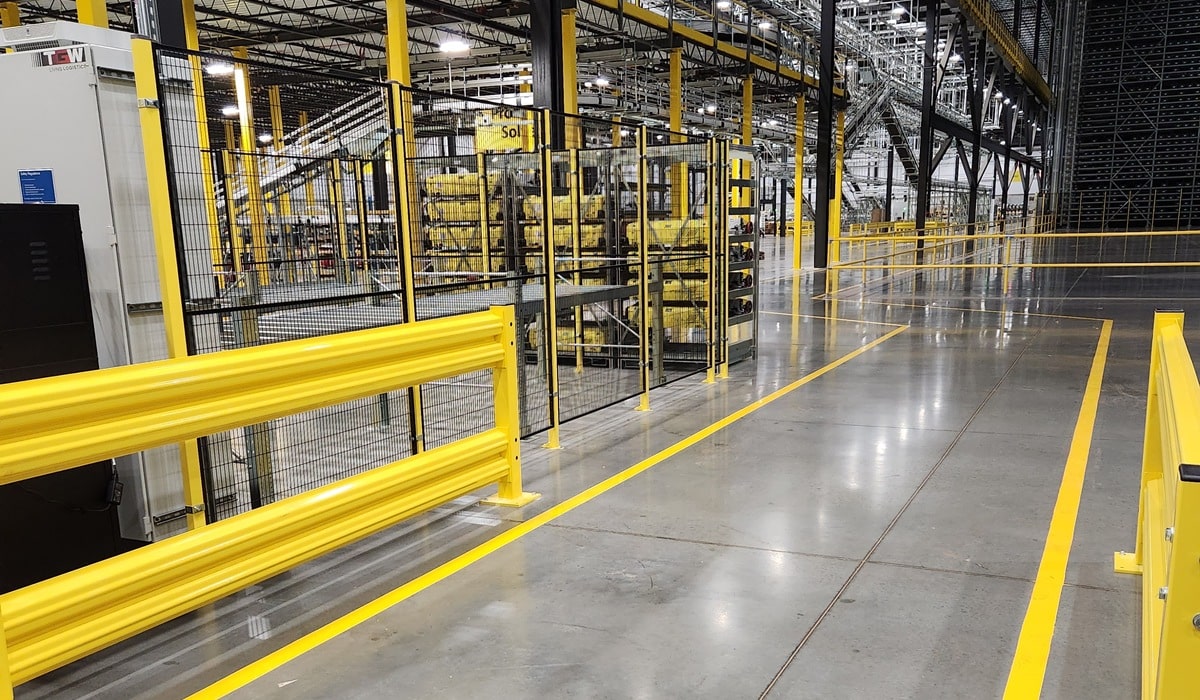
OSHA 29 CFR 1910.144 standardizes marking colors to communicate safety information. Yellow marks caution areas; red marks emergency stops and fire equipment; black and white stripes mark high-risk traffic areas.
Markings must be 2 to 4 inches wide, highly visible, and durable. Integrated striping in industrial floor coating systems is more durable than tape and resists chemical exposure.
Financial Risk of Non-Compliance
OSHA fines for walking-working surface violations run thousands of dollars per citation, and slip-and-fall injuries drive tens of billions in workers’ compensation costs annually across U.S. industry. Investing in compliant flooring protects both the worker and the operations budget.
Long-Term Cost Analysis vs Initial Investment
The lowest bid almost always becomes the most expensive option over a 10-year operating horizon. The math is consistent across industrial applications.
The Low-Bid Trap
DIY kits and low-bid installs often skip the critical preparation work that determines whether the coating bonds permanently or fails within 3 years. The same pattern applies across all coating applications, from industrial floors to residential patios.
For the residential side of this same trap that mirrors what happens in industrial environments, see our guide on problems with unprofessional patio coatings.
The 10-Year Comparison
Consider a 10,000-square-foot warehouse over 10 years.
A low-bid scenario at $7 per square foot ($70,000 initial) that fails after 3 years and requires complete removal plus reinstallation runs roughly $210,000 in total cost over the decade. A professional installation at $12 per square foot ($120,000 initial) that lasts 15 years with minor touch-ups at year 10 runs roughly $130,000.
The Decision Math
The professional install costs more on day one and costs roughly 38% less over 10 years. That gap widens further if the low-bid failure causes operational downtime, OSHA citations, or workers’ compensation claims.
For the broader pattern of why low-bid commercial work creates expensive rework cycles, see our guide on commercial coating problems and rework cycles.
Making the Right Choice for Your Facility
Three factors decide whether your industrial floor coating becomes a 15-year asset or a 3-year liability.
When Polyurea Wins Over Epoxy
Polyurea systems offer better long-term value than epoxy for most industrial applications despite higher upfront costs. Polyurea is approximately 4 times stronger than epoxy in tensile strength and offers significantly higher elongation, which means it resists cracking under thermal cycling and impact.
For high-traffic warehouse, manufacturing, or distribution environments, polyurea is increasingly the standard specification. The premium pays back through extended service life and reduced downtime.
What to Look for in a Contractor
Experience with industrial-grade applications is non-negotiable. Industrial environments do not allow for trial and error, and the cost of a failed install far exceeds the savings of a low-bid contractor.
For the specific failure patterns that signal a contractor lacks industrial experience, see our guide on painful commercial coating errors to avoid.
Design and Aesthetic Considerations
Color selection on industrial floors affects both aesthetics and operational visibility. For why color decisions deserve more attention than facility managers usually give them, see our guide on color trends that failed fast.
Your facility floor is the single most-stressed surface in your operation, and the wrong coating choice creates a 10-year cost problem and an ongoing safety and compliance risk. Whether you want a clear assessment of which system fits your specific operating environment, a detailed quote based on your facility’s surface condition and operational requirements, or a professional industrial concrete floor coating installation that holds for 15 years, our team at Select Coatings will walk you through exactly what your facility needs.
Call 913-349-6689 for a FREE estimate today.
