

Homeowners often spend time and energy updating interiors — swapping hardware, changing flooring, even painting cabinets to refresh the kitchen or bathroom. But the patio? It’s one of the most overlooked parts of the home, despite being the space that experiences the harshest conditions. A professionally installed patio coating protects your concrete, enhances outdoor living areas, and prevents expensive long-term damage.
The problem is that many homeowners try to DIY their patio coatings or hire low-cost, inexperienced contractors who do not understand substrate conditions, moisture levels, UV exposure, curing windows, or long-term coating behavior. That’s when painful problems begin: peeling, cracking, fading, slippery surfaces, and color blotching.
Just like painting cabinets requires precision, product knowledge, and proper surface prep, applying patio coatings successfully demands specialized expertise. And in a climate like Lawrence, KS — with heat, moisture, freeze-thaw cycles, and dramatic temperature swings —installation mistakes lead to rapid coating failure.
This guide breaks down the five most common problems caused by unprofessional patio coatings, why they happen, and how professional installation from Select Coatings ensures a durable, safe, and visually appealing outdoor surface built to last.
Why Patio Coatings Are Technically Challenging
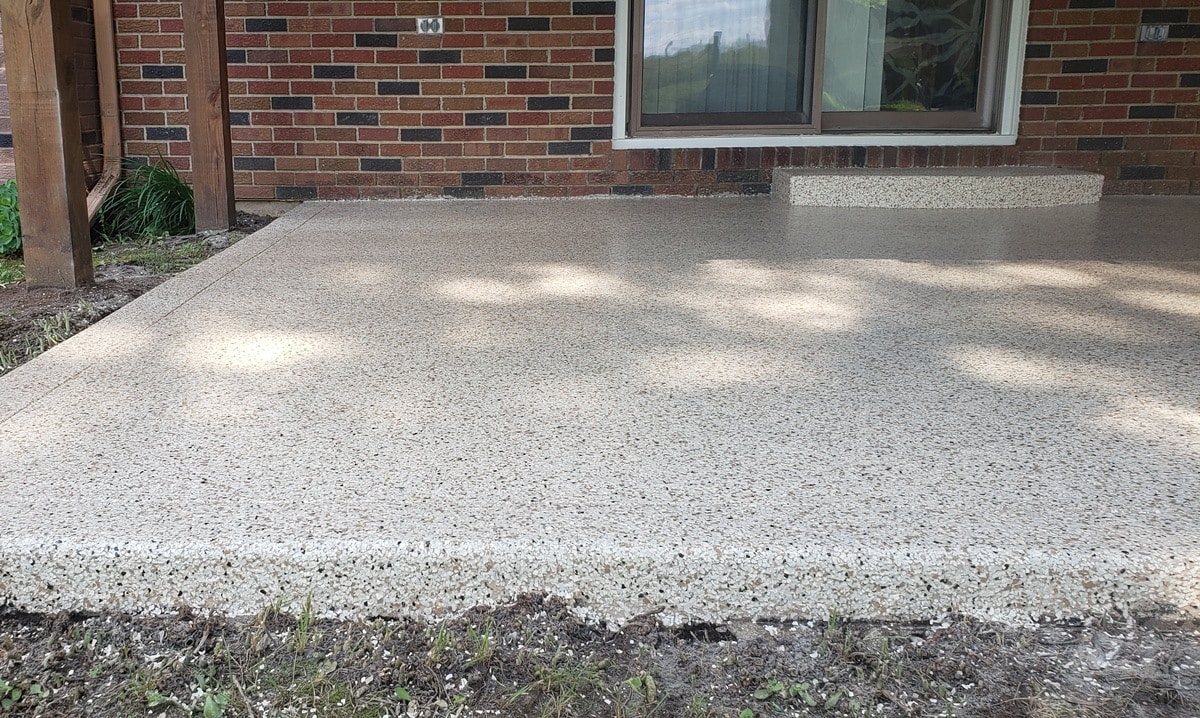
Patio coatings look simple on the surface, but the science behind them is closer to industrial floor systems. Outdoor concrete constantly absorbs moisture, expands and contracts with temperature, and endures heavy foot traffic, sun exposure, and weather stress.
Just like with painting cabinets, where incorrect paint or poor prep can ruin a finish, patios require proper product chemistry and careful application. Many homeowners underestimate the importance of concrete profiling, moisture testing, and primer compatibility. Low-quality coatings or rushed installations tend to fail quickly.
Professional patio coatings often use systems like:
-
Epoxies for adhesion and build
-
Polyurethanes for flexibility and UV stability
-
Acrylics for color retention
-
Polyaspartics for fast curing and outdoor durability
Unprofessional application — such as applying a coating in direct sunlight, painting over damp concrete, skipping primers, or using interior-grade paint on exterior surfaces — guarantees early failure.
For homeowners comparing the technical complexity of patio coatings to painting cabinets, it’s worth noting that both require:
-
Specialized coatings
-
Thorough surface preparation
-
Controlled curing environments
-
Product compatibility checks
-
Long-term maintenance awareness
But patios add the additional challenge of weather, moisture vapor transmission (MVT), and UV exposure.
Common Patio Coating Problems and Professional Solutions
| Problem | Why It Happens | Professional Solution |
|---|---|---|
| Peeling or delaminating | Poor prep, wrong coating, moisture | Concrete profiling + epoxy/urethane system |
| Cracking or bubbling | Rapid curing or trapped moisture | Moisture mitigation + thin, controlled coats |
| Slippery surfaces | Smooth finishes, no texture | Anti-slip additives, textured systems |
| Fading or UV damage | Low-quality materials | UV-resistant acrylics or polyaspartics |
| Uneven appearance | Poor mixing or rushed work | Uniform primer + professionally mixed coatings |
1. Peeling or Delaminating Coatings
Few things frustrate homeowners more than watching their new patio coating peel after the first season. Just like poorly prepped surfaces cause painting cabinets to fail, patios suffer the same fate when prep is skipped or products are mismatched.
Why It Happens
Peeling typically stems from poor adhesion. The usual culprits include:
-
Applying coatings on unclean, oily, or dusty concrete
-
Painting over efflorescence or laitance
-
Using floor paint instead of a true exterior coating system
-
Moisture vapor pushing upward from the slab
-
Skipping the concrete primer
-
Applying coating in extreme temperatures
Concrete is far more temperamental than homeowners realize. Moisture vapor transmission can push coatings off the surface even when everything appears dry.
The Professional Solution
Professionals start by deep cleaning, degreasing, and pressure washing the patio. Next, they mechanically profile the concrete — usually via grinding — to create the necessary texture for adhesion. Cracks and spalls are repaired, and moisture levels are tested using industry-standard tools.
Then, a high-bond concrete primer is applied before the coating system — typically an epoxy base followed by a polyurethane or polyaspartic topcoat.
2. Cracking or Bubbling Surfaces
Cracks and bubbles often show up weeks — or even days — after installation. Homeowners frequently confuse these with structural problems, but they’re usually the result of an inexperienced installer.
Why It Happens
Cracking and bubbling occur when:
-
Moisture becomes trapped under the coating
-
The coating is applied too thick
-
Application happens during high heat or full sunlight
-
The installer uses incompatible products
-
Concrete expands under thermal stress
Bubble formations occur when solvents try to escape but are trapped under a fast-curing layer.
The Professional Solution
Professionals test concrete moisture levels before installation. If moisture is elevated, moisture mitigation primers or vapor barriers are used. Installers apply coatings in controlled thicknesses and allow full curing time between layers.
Additionally, flexible urethane and polyaspartic systems are selected to handle the freeze-thaw patterns common in Lawrence, KS.
Homeowners familiar with painting cabinets know the danger of rushing dry times — patio coatings behave the same way, just on a larger scale.
3. Slippery Surfaces

A slippery patio is a safety hazard — especially for families with kids, seniors, or pets. Smooth, glossy coatings look beautiful but can become dangerous when wet.
Why It Happens
The biggest mistake? A coating installer who uses a slick product with no texture additives. High-gloss finishes lack traction, especially when exposed to rain, irrigation systems, or pool splash-over.
The Professional Solution
Professionals add texture using:
-
Aluminum oxide
-
Fine silica sand
-
Polypropylene texture beads
This ensures solid traction while still keeping the patio visually appealing. Slip resistance is one of the most overlooked elements of patio coatings — and one that homeowners rarely consider until it’s too late.
4. Fading or UV Damage
Just as low-quality paints fade on cabinet doors right next to a sunny window, patio coatings degrade even faster outdoors.
Why It Happens
Most DIY coatings simply aren’t designed for full UV exposure. Low-grade pigments and acrylic resins break down under sunlight, leaving a chalky, washed-out appearance.
The Professional Solution
Professionals use UV-stable acrylics, polyurethanes, and polyaspartics — coatings designed explicitly for outdoor UV resistance. A clear UV topcoat can also lock in color for years.
Homeowners focusing on environmentally safe solutions may also benefit from materials evaluated under ecolabels on paint and standards on greener products.
5. Uneven Appearance or Color Variations
Uneven color, patchy gloss, and visible roller lines instantly cheapen a patio’s appearance. Similar issues happen when painting cabinets without proper leveling or lighting.
Why It Happens
These visual problems frequently stem from:
-
Poor mixing
-
Inconsistent primer application
-
One thick coat instead of multiple thin layers
-
Using interior paints outdoors
-
Uneven curing due to sunlight or temperature
-
Wrong rollers, brushes, or sprayer technique
In many cases, the coating was not mixed long enough or was applied directly over unprimed concrete.
The Professional Solution
Professionals follow strict mixing procedures, use mechanical mixers, and track pot life times. They start with a uniform primer layer and follow with multiple thin coats for even drying. Clear topcoats may be added for gloss consistency.
Patio Coating Types and Their Ideal Uses
| Coating Type | Best For | Key Characteristics |
|---|---|---|
| Epoxy | Base layer on concrete | Strong adhesion, chemical resistance |
| Polyurethane | Outdoor topcoats | Flexible, UV resistant |
| Acrylic | Decorative finishes | Good color retention |
| Polyaspartic | Fast-curing systems | Superior durability, UV stability |
Why Professional Patio Coating Services Matter
Homeowners often compare patio coating projects to painting cabinets because both can be attempted DIY — but both are easy to get wrong.
Professionals bring essential advantages:
-
Concrete profiling and moisture testing
-
Knowledge of coating behavior in local climates
-
Access to industrial-grade materials not available in retail
-
Correct installation procedures, curing windows, and environmental controls
-
Integrated safety solutions like slip resistance
Professional installations also prevent liability issues — like a slippery patio where someone might fall.
Select Coatings specializes in patio coatings engineered for durability, safety, and visual appeal, protecting outdoor spaces even in Kansas’s unpredictable weather. For homeowners interested in other protective coating technologies, learn more through our internal insight on intumescent coatings.
Common Questions About Patio Coatings
How long do professional patio coatings last?
Top-tier systems last 5–10 years depending on climate and use.
Can I DIY my patio coating?
You can — but adhesion failures, cracking, and early peeling are extremely common without proper prep and tools.
What is the best coating for pool areas?
Polyaspartic or polyurethane systems with built-in slip resistance.
What causes bubbling or blistering?
Moisture trapped under the coating or excessive thickness during application.
Are patio coatings colored or clear?
Both options exist. Pigmented coatings add color; clear coats protect and enhance appearance.
Protect Your Patio and Your Home Investment
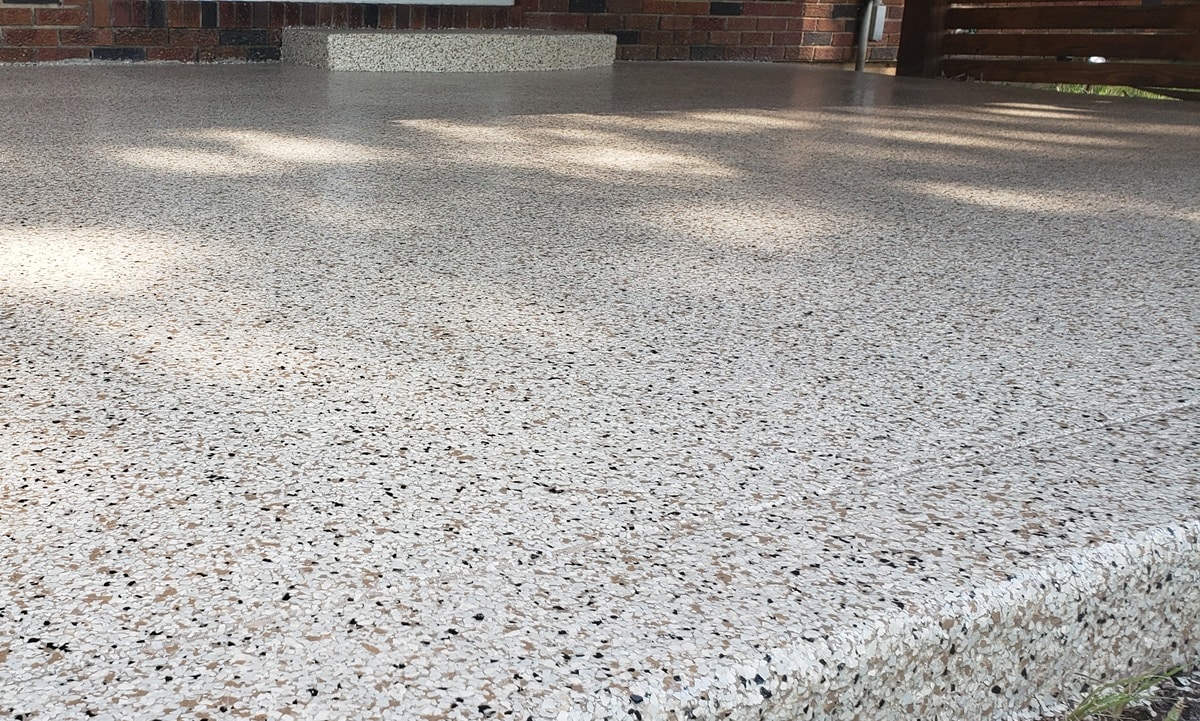
Unprofessional patio coatings lead to peeling, cracking, slippery surfaces, fading, and uneven appearance. Each of these problems costs time, money, and frustration — often more than what a professional installation would have cost from the beginning.
Just as painting cabinets requires technical knowledge and the right products, patio coatings demand specialized preparation, climate awareness, and coating system expertise. Cutting corners nearly always leads to premature failure.
For long-lasting outdoor protection and beautiful results in Lawrence, KS, trust Select Coatings to install durable, slip-resistant, and weatherproof patio coatings designed for Kansas’s unique climate.
