
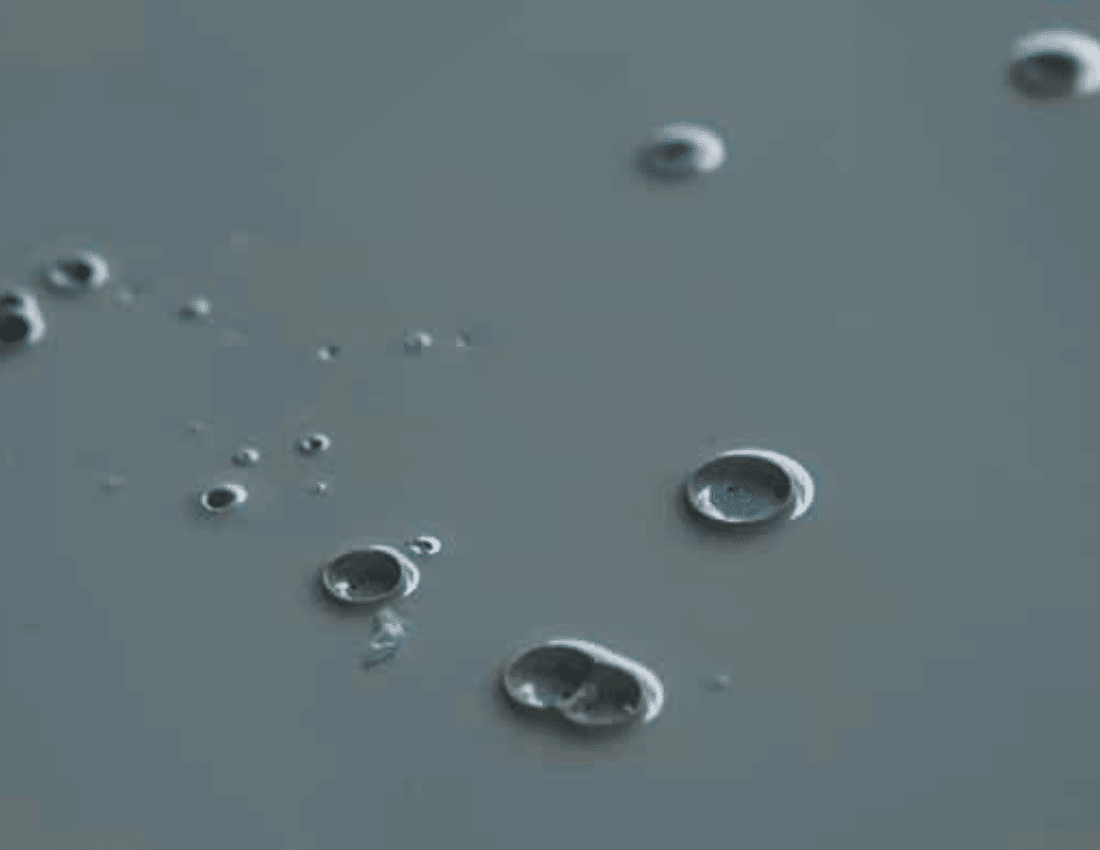
You had your garage floor coated and it looked great for a few weeks. Then you noticed something. Small raised bumps appear under the surface. Maybe a few at first, then more. Some have already popped and left rough, flaking craters behind.
Concrete floor coating bubbles are one of the most common complaints after a garage floor project, and they almost always point to something that went wrong before the coating ever touched the floor. Understanding the cause tells you a lot about whether the issue is fixable or whether you are looking at a full redo.
Here is what is actually behind those bubbles and why they happen.
Key Takeaways
What Concrete Floor Coating Bubbles Actually Are
When you see a bubble under a floor coating, you are looking at a pocket of gas or vapor that formed between the coating film and the concrete surface below it. The coating lifted away from the substrate in that spot, and the pressure of what is trapped underneath pushed it up into a dome shape.
That separation is an adhesion failure. It means the bond between the coating and the concrete broke down in that area. Once that happens, the surrounding film is also compromised. The bubble may hold its shape for a while, but eventually the edges start to peel and the failure spreads outward from the original spot.
The coating did not bubble because it was weak. It bubbled because something prevented it from bonding correctly in the first place.
The Main Cause: Moisture in the Concrete
This is where the majority of bubbling cases start. Concrete looks solid and dry, but it is a porous material that holds and transmits moisture vapor continuously. That vapor moves upward through the slab from the ground beneath it, and if a coating is applied before that vapor has a clear path to escape, the pressure builds under the film and forces it up.
The technical term for this is hydrostatic pressure, and it is one of the most documented causes of coating failure on concrete floors. According to The Concrete Network, moisture vapor transmission through concrete slabs is a primary driver of delamination and blistering in surface-applied coatings, particularly in climates with high ground moisture or significant seasonal humidity variation.
Kansas City sits in a region with significant seasonal humidity shifts. Spring and summer months bring high ambient humidity, and ground moisture levels rise accordingly. Garage floors that appear dry on the surface may still be transmitting vapor at levels that will cause bubbling if a coating is applied without proper moisture testing and preparation.
Concrete Floor Coating Bubbles from Poor Surface Preparation
This is the most preventable cause and also the most common one in DIY and budget installation scenarios.
For a coating to bond correctly to concrete, the surface needs to be mechanically opened. Concrete straight from a pour or an older slab has a surface layer that is too smooth and dense for most coatings to bond to without preparation. That surface layer also traps contaminants: oil, grease, dust, and curing compounds that prevent adhesion even if the concrete feels clean.
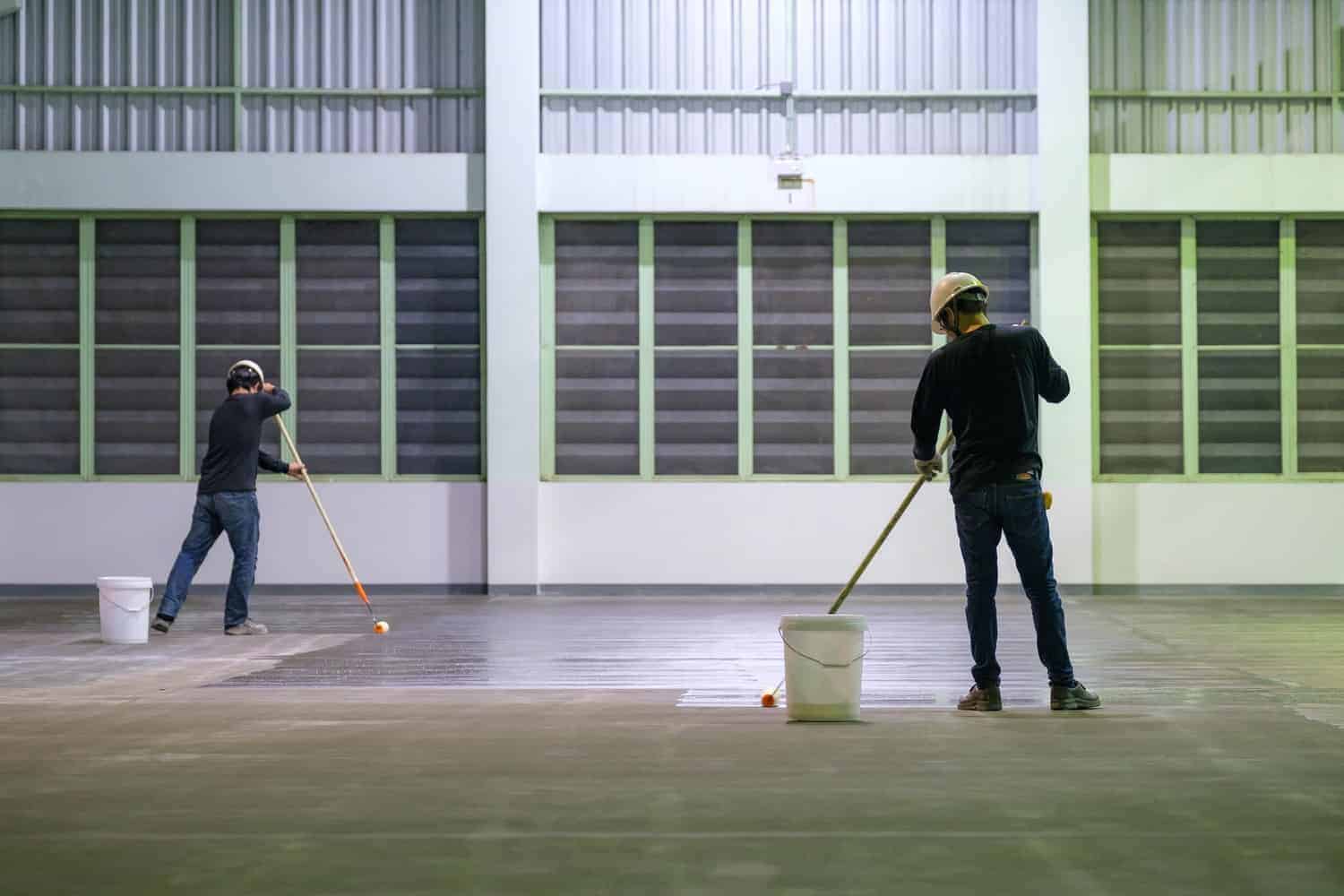
The correct preparation method is diamond grinding, which physically removes the top layer of the concrete surface and opens the pores so the coating can penetrate and bond at a mechanical level. Acid etching is sometimes used as an alternative but it is far less effective at removing embedded contaminants and does not open the concrete structure the same way grinding does.
A floor that was not ground before coating will almost always bubble. The coating sits on top of the surface layer rather than bonding into it, and any vapor pressure, temperature change, or impact stress will lift it.
Select Coatings uses an 800 lb propane-powered planetary grinder connected to triple HEPA filter vacuum systems on every project. That preparation standard is not standard across the industry. It is the step that separates a coating that holds for 15 years from one that bubbles within 6 months.
Temperature and Application Timing Errors
Coating chemistry is temperature-sensitive. Both epoxy and polyaspartic systems have application windows, meaning they need to be mixed and applied within specific temperature ranges to cure correctly.
If coating is applied when the concrete or ambient temperature is outside that range, the chemical reaction that creates the bond does not complete properly. The result is a film that looks cured on the surface but has not fully bonded to the substrate. Bubbles often appear within days or weeks as temperature and moisture stress begin.
According to ACI 308 guidelines from the American Concrete Institute, concrete surface temperature at time of coating application is a critical variable in achieving proper adhesion and curing, with both high and low extremes creating conditions for adhesion failure.
In Kansas City, this becomes relevant on early spring and late fall projects when morning temperatures can sit well below application minimums even if the afternoon feels warm. Professional applicators check concrete surface temperature, not just air temperature, before any coating goes on.
Why Some Coatings Bubble More Than Others
Not all coating chemistries respond to moisture pressure the same way. This is where product selection makes a real difference.
Rigid epoxy films cure into a hard, inflexible surface. When moisture vapor builds pressure beneath them, there is nowhere for that pressure to go except up into the film. The rigid coating lifts rather than redistributing the stress, which is why epoxy garage floors bubble more frequently than polyurea-based systems under the same conditions.
Polyurea and polyaspartic systems cure into a more flexible film. That flexibility allows the coating to manage minor stress from moisture vapor and temperature movement without lifting from the substrate. The film moves slightly with the concrete rather than pulling away from it.
Understanding the full difference between these 2 coating types, not just in terms of bubbling but across durability, cure time, and long-term performance, is worth reading before committing to any floor coating project. The comparison of polyurea vs epoxy floor coating systems covers how each chemistry responds to the conditions that cause most coating failures.
What Bubbles Tell You About the Installation
If your floor is already bubbling, the pattern can tell you something about what went wrong.
Bubbles appearing within the first few weeks almost always point to a preparation or application issue. The concrete was not properly ground, the surface had contamination, the temperature was wrong, or the coating was applied too thick in sections and trapped air during curing.
Bubbles appearing after 1 to 2 years often point to moisture vapor transmission that was not addressed during installation. The floor looked fine initially but ground moisture has been building pressure under the film over time.
Bubbles concentrated near the garage door threshold are common in climates with hard winters. Road salt and snow melt are tracked in and sit at the threshold, and the freeze-thaw cycles there are more extreme than in the middle of the floor.
Knowing how to read early coating failure before it spreads gives you options. The guide on garage floor coating warning signs walks through what early deterioration looks like and when you are still in a position to address it before a full redo becomes the only answer.
Can Bubbles Be Repaired?
Sometimes, but it depends on how far the failure has spread and what caused it.
A single isolated bubble that has not popped yet can occasionally be addressed with a spot repair if the surrounding bond is sound. But if the cause was inadequate preparation or moisture vapor transmission, spot repairs will not hold. The same conditions that created the first bubble will create more.
In most bubbling scenarios where the cause was surface preparation, the right answer is a full grind and re-coat. The existing coating needs to come off, the concrete needs to be properly prepared, a moisture mitigation step needs to be added if vapor transmission is the cause, and the correct coating system needs to be applied from scratch.
That is a real cost and a frustrating one, especially if the original installation was not cheap. It is also the reason why understanding what separates a concrete coating from garage floor paint matters before the first project, not after it has failed.
At Select Coatings, every project starts with mechanical diamond grinding, moisture assessment, and crack repair before any product goes on. It is a longer setup than most budget installs but it is why our coatings hold up across Kansas City Metro homes in Lenexa, KS and the surrounding area without the bubbling and peeling that bring homeowners back to square one.
Reach out to our garage floor coating team and call us for a FREE estimate today. We will assess your floor’s current condition and tell you exactly what it needs before any coating goes down.
