

Running a restaurant is about more than food and service. It’s also about compliance, safety, and operational efficiency. In Lenexa, KS, restaurant operators face high expectations from health inspectors and customers alike. That’s why a professional coating job is not just a cosmetic upgrade—it’s a necessity. Regular paints can’t hold up against grease, spills, constant traffic, and sanitation requirements. The right commercial coatings are designed to meet these challenges head-on.
This blog breaks down why restaurants need specialized coating systems, the product options available, how they support health-code compliance, and why working with a professional contractor saves time and money in the long run.
What Makes a Restaurant Coating Job Different
A coating job in a restaurant facility is different from painting an office, warehouse, or home. Restaurants are high-stress environments. Floors and walls endure daily exposure to:
Grease and oils from kitchens.
Frequent washdowns and strong cleaning chemicals.
High traffic from staff and customers.
Thermal shock in cold storage or near ovens.
Unlike basic paint, commercial-grade coatings—such as epoxy, polyurethane, and polyaspartic—are engineered to resist these stressors. Some are even antimicrobial, providing an extra layer of food safety protection.
Restaurants in Lenexa can look to other industries for proof. For instance, floor coatings improving workflow in manufacturing plants show how durable surfaces streamline operations. Restaurants gain similar benefits: safer staff movement, easier cleaning, and fewer disruptions.
Key Areas in Restaurants That Require Specialized Coatings
Every part of a restaurant has unique coating requirements:
Kitchens
Non-slip, grease-resistant, and easy-to-clean coatings are a must. A coated kitchen floor reduces slip-and-fall accidents and allows sanitation crews to clean more effectively.
Dining Rooms
Here, aesthetics matter. Durable coatings that resist scuffing, scratching, and staining keep the dining area looking fresh. Polyaspartic finishes are popular for their clarity and fast cure times.
Bathrooms
High moisture levels make bathrooms prone to mold and bacteria. Antimicrobial coatings provide an added layer of hygiene.
Storage and Coolers
Thermal shock resistance is essential in areas exposed to temperature swings. Specialized epoxy systems keep surfaces intact despite constant expansion and contraction.
Loading Docks & Service Areas
These see heavy foot traffic and cart movement. Abrasion-resistant coatings extend lifespan and reduce downtime.
Hygiene and Health-Code Compliance
Health departments demand that restaurants maintain non-porous, easily cleanable surfaces. A professional coating job helps meet these requirements by sealing porous concrete or drywall. This prevents bacteria and mold from finding a foothold.
Benefits include:
Reduced bacterial growth.
Faster sanitization between shifts.
Surfaces that withstand FDA- and USDA-approved cleaning protocols.
By investing in the right coatings, restaurant owners reduce their risk of failed inspections and protect both their reputation and their bottom line.
Choosing the Right Coating System
Selecting the right material is critical. Below is a side-by-side comparison of popular coating systems for restaurants.
Restaurant Coating Options Compared
Epoxy — Best Application: Kitchens, floors, walls · Durability: High · Hygiene Rating: Excellent · Cost Level: $$
Polyurethane — Best Application: Chemical-heavy areas · Durability: Very High · Hygiene Rating: Good · Cost Level: $$$
Polyaspartic — Best Application: Dining rooms, visible spaces · Durability: High · Hygiene Rating: Good · Cost Level: $$$
Antimicrobial — Best Application: Bathrooms, prep areas · Durability: Moderate–High · Hygiene Rating: Superior · Cost Level: $$$$
Each coating is selected based on specific operational needs. For example, kitchens often rely on epoxy because of its chemical resistance, while dining rooms benefit from polyaspartic finishes that cure fast and minimize downtime.
Safety and Slip Resistance
Restaurant floors are among the most hazardous in the service industry. OSHA requires non-slip flooring in high-risk areas. A professional coating job can incorporate anti-slip additives and textures, reducing risks during peak service hours when spills are most likely.
Slip resistance doesn’t just protect staff—it also improves workflow. When employees feel safe moving quickly, kitchens operate more efficiently.
How the Right Coating Job Improves Operations
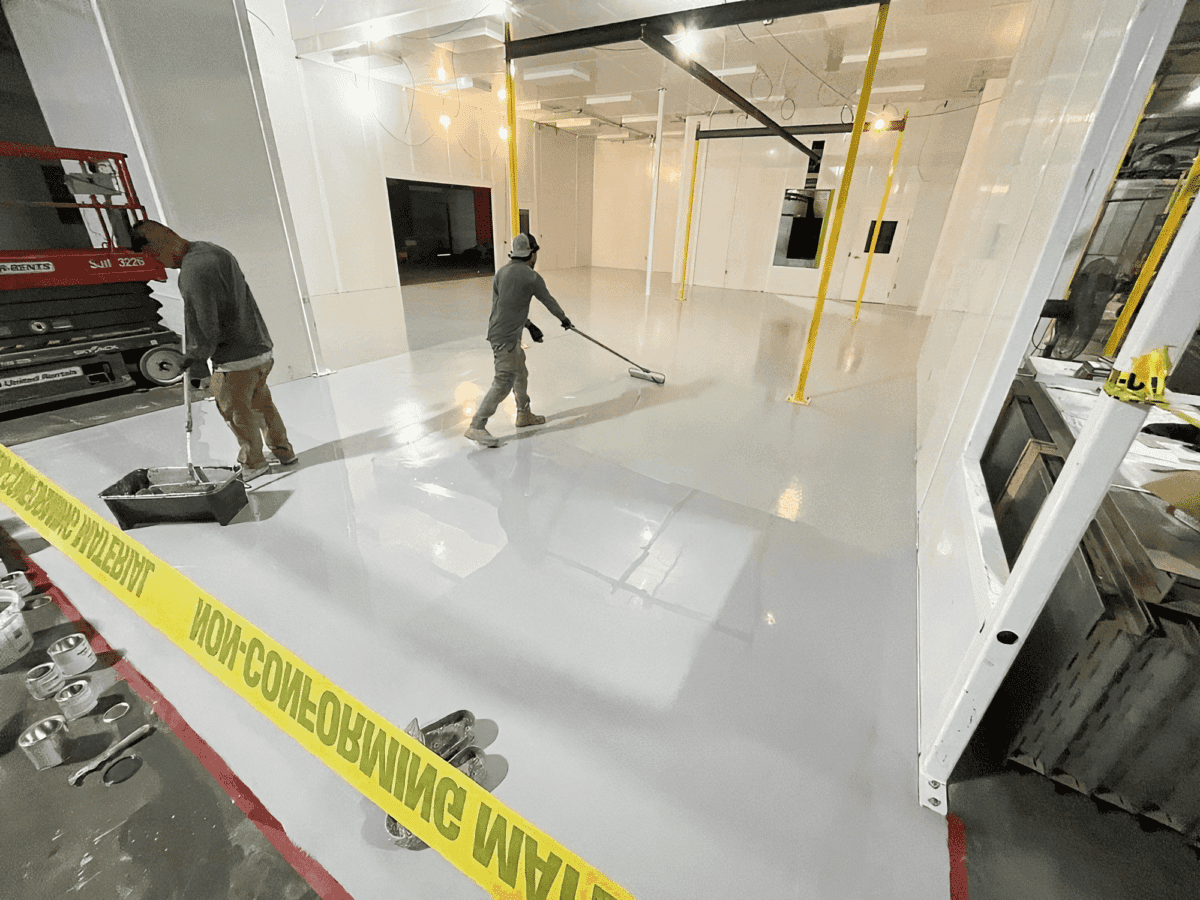
A well-executed coating project supports every part of restaurant workflow:
Faster Cleaning: Non-porous coatings cut cleaning time and reduce labor costs.
Safer Staff: Slip-resistant finishes lower injury risks, reducing insurance claims.
Improved Customer Experience: Dining rooms look cleaner and more professional.
Longer-Lasting Equipment: Smooth floors reduce wear on carts and kitchen gear.
Just as floor coatings improving workflow in manufacturing plants increase efficiency in factories, restaurant coatings eliminate bottlenecks caused by unsafe or hard-to-clean surfaces.
Choosing a Commercial Coatings Contractor in Lenexa, KS
The success of any coating job depends on proper preparation and application. Professional contractors bring:
Moisture Testing: Ensures coatings adhere properly.
Crack & Damage Repair: Extends lifespan of the system.
Surface Profiling: Shot blasting, grinding, or scarifying for strong adhesion.
Fast-Curing Systems: Minimize restaurant downtime.
When comparing bids, restaurant owners should evaluate not just price but also prep work, warranty, and compliance expertise.
People Also Asked
What are the main challenges in a restaurant coating job?
The biggest challenges are scheduling work around operating hours, ensuring food safety compliance, controlling odors and VOCs, and preparing high-traffic surfaces properly for coatings.
Why does surface preparation take longer than coating application?
Because prep determines how long the coating will last. Grinding, degreasing, repairing cracks, and applying primers often take 70% of the total project time.
How do contractors handle safety risks in restaurants?
Professionals follow OSHA safety rules, use PPE, and apply containment systems to prevent dust or fumes from entering food prep and dining areas.
Can a coating job be done without shutting down the restaurant?
Yes, but it requires after-hours scheduling, phased application, and fast-curing or low-odor products designed for food-service environments.
What types of coatings are best for commercial kitchens?
Epoxy and polyurethane coatings are common. Epoxy resists grease and chemicals, while polyurethane adds flexibility and scratch resistance.
Why do restaurant coating jobs sometimes cost more than expected?
Hidden repairs like concrete damage, grease removal, or the need for moisture mitigation can increase costs after the initial estimate.
How do professional contractors keep projects on schedule?
They use project management tools, supplier partnerships, and detailed prep plans to ensure coatings cure properly without delaying reopening.
What should restaurant managers know before starting a coating job?
Plan for proper prep, confirm coatings meet food-safety standards, budget for contingencies, and work only with licensed contractors.
A Coating Job That Pays for Itself
In restaurants, coatings aren’t cosmetic—they’re essential. The right system ensures compliance, improves hygiene, and reduces accidents, all while saving money in the long run.
For restaurant owners in Lenexa, KS, partnering with a professional coatings contractor means less stress, smoother operations, and better customer experiences.
Call Select Coatings today to schedule your consultation and get the coating job your restaurant truly needs.
Service Areas
Proudly Serving The Greater Kansas City Metro
Our skilled team at Select Coatings offers concrete coating services for the homes and businesses of our neighbors in Lenexa, KS, and the surrounding communities. We provide free estimates to inform you what costs to expect with your floor coatings project, and we’ll carefully listen to your needs to deliver an outcome you’ll love.
We serve the Greater Kansas City Metro Area and the surrounding suburbs. Call us today at 913-349-6689 or schedule online!
Kansas City, KS/MO
Overland Park, KS
Lenexa, KS
Olathe, KS
Lee’s Summit, MO
Lawrence, KS
Belton, MO
Blue Springs, MO
Chillicothe, MO
Craig, KS
Gardner, KS
Gladstone, MO
Greenwood, MO
Grandview, MO
Independence, MO
Jefferson City, MO
Liberty, MO
Mission, KS
Northland Kansas City, MO
Oak Grove, MO
Parkville, MO
Prairie Village, KS
Raymore, MO
Roeland Park, KS
Spring Hill, KS
Topeka, KS
Lansing, KS
Leawood, KS